 Free Phone
 Made to Measure
 10 Year Guarantee
 Directly From Manufacturer
Kitchen Island Zoning with Aluminium Roof Lanterns

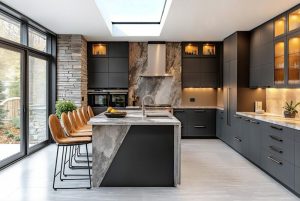
Summary: Elevating Open-Plan Design Through Strategic Overhead Glazing
- Architectural Zoning: Masterfully defines specific functional areas, such as the kitchen island, within expansive open-plan layouts without intrusive physical partitions.
- Thermal Excellence: Features an advanced polyamide nylon glass composite thermal break, guaranteeing a system that is up to 65% more thermally efficient than standard aluminium alternatives.
- Aesthetic Superiority: Achieves a sleek, minimalist finish with ultra-slim 66mm sightlines and premium, durable powder-coated aluminium frames for maximum light transmission.
Redefining the Heart of the Home with Overhead Light
The modern open-plan kitchen is far more than a mere culinary workspace; it is the architectural heart of the home. When designing these expansive, multi-functional areas, establishing clear, purposeful zones without relying on solid walls is paramount to maintaining a fluid and contemporary aesthetic. This is where the strategic installation of aluminium roof lanterns truly excels.
By channelling a dramatic influx of natural daylight directly above key focal points, most notably the kitchen island, homeowners and designers can fundamentally enhance both the form and function of their living space. Whether you are an installer planning a sophisticated extension or a homeowner embarking on a major renovation, you can browse aluminium roof lanterns to discover how precision-engineered overhead glazing transforms ordinary structural extensions into extraordinary architectural statements.
Our guide delves into the structural, aesthetic, and technical mastery required to optimise kitchen island zoning, ensuring your chosen rooflight delivers not just visual impact, but unparalleled year-round energy efficiency.
The Principles of Zoning Architecture Above the Kitchen Island
Open-plan living spaces run the risk of feeling cavernous or unstructured if functional areas are not clearly defined. Zoning architecture solves this by using spatial cues, flooring transitions, and, most effectively, lighting, to anchor specific activities.
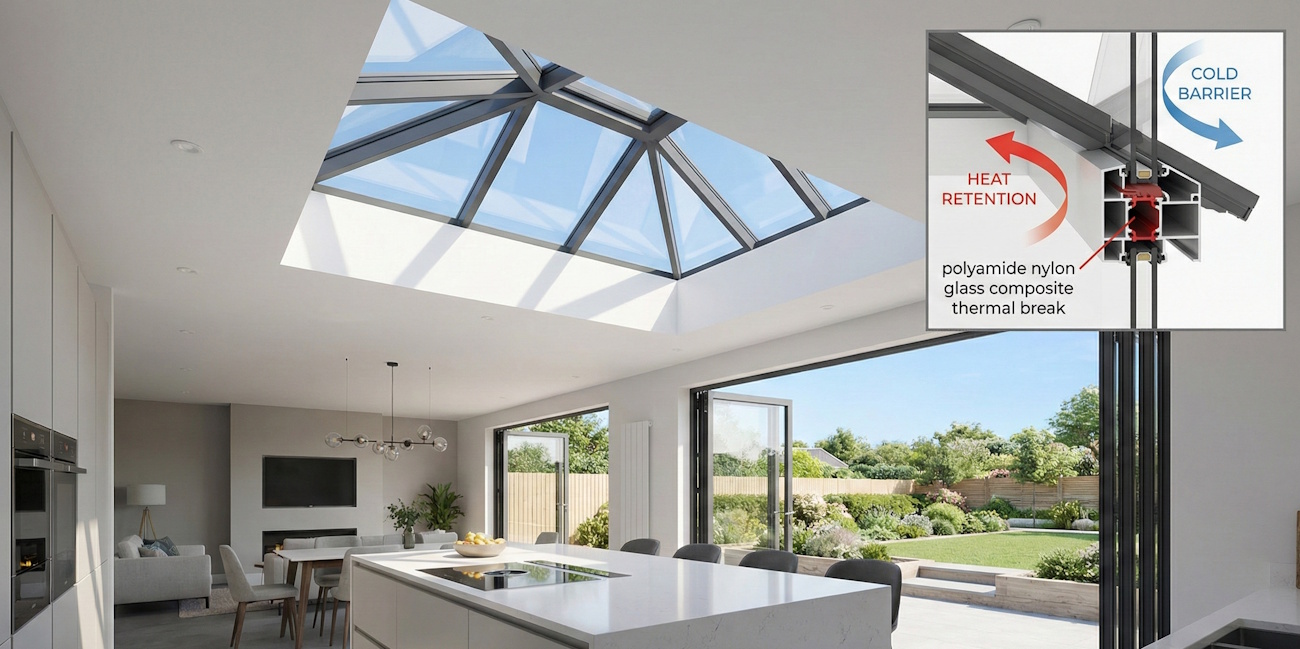
Installing a premium skylight directly above a kitchen island creates an invisible vertical column of light. This natural illumination acts as a subtle yet definitive boundary, subconsciously signalling the transition from a relaxed dining or living area into the active culinary zone.
Proportion and Positioning for Maximum Impact
To achieve architectural harmony, the dimensions of the overhead glazing must carefully echo the footprint of the island below. As a general rule of thumb within professional design circles, the lantern should be proportionately smaller than the worktop beneath it. Leaving a solid ceiling border (typically between 300mm to 600mm) around the perimeter of the lantern aperture not only frames the sky beautifully but also provides the necessary structural real estate to install task lighting, such as elegant pendant lights or recessed spotlights, directly over the preparation area.
By marrying natural zenithal light during the day with targeted task lighting at night, the kitchen island remains the undisputed centrepiece of the room, regardless of the hour.
The Science of Superior Energy Efficiency: Eradicating Cold Bridging
A historical critique of highly glazed extensions has been their poor thermal performance, often resulting in spaces that are too stifling in July and freezing in December. However, modern engineering has completely eradicated this issue for those who invest in premium systems. The defining hallmark of high-quality aluminium lantern roof lights is their hidden thermal technology.
Aluminium is incredibly strong and lightweight, but it is also a highly conductive metal. In older or inferior rooflights, the external aluminium frame touching the cold winter air would transfer that freezing temperature directly to the inside of the home, a process known as ‘cold bridging’. This results in condensation, draughts, and exorbitant heating bills.
To counter this, superior systems utilise an innovative polyamide nylon glass composite thermal break. This component physically separates the internal and external aluminium profiles. Because polyamide is a highly effective insulator, it completely severs the thermal bridge.
The 65% Efficiency Advantage
The integration of this thermally broken ridge-and-eaves structure is transformative. By locking the cold out and trapping the ambient heat in, this cutting-edge construction ensures that the roof system is up to 65% more thermally efficient than standard, non-broken aluminium equivalents. This results in exceptionally low U-values, ensuring that the property remains fully compliant with stringent modern building regulations whilst significantly reducing the homeowner’s carbon footprint and energy expenditure.
Conquering the Climate: The Necessity of Solar Control Glass
While the thermally broken frame prevents winter heat loss, managing summer heat gain is equally critical in a South-facing or highly glazed extension. The solution lies in specifying advanced glazing options that actively manage the room’s climate.
Solar Control Glass is an absolute necessity for any large-scale rooflight installation. This high-performance glass features microscopic, transparent coatings applied during the manufacturing process. These coatings act as an intelligent filter:
- Reflecting Solar Heat: During the height of summer, the glass reflects a significant portion of the sun’s infrared radiation outward, helping prevent the ‘greenhouse effect’ and keeping the kitchen island comfortably cool.
- UV Protection: It drastically reduces the transmission of ultraviolet rays, protecting expensive kitchen cabinetry, soft furnishings, and timber flooring from fading over time.
- Retaining Radiant Heat: In the winter months, the same coating reflects radiant heat generated from the central heating back into the room, working in tandem with the polyamide thermal break to maintain a stable, cosy temperature.
By combining a thermally broken frame with argon-filled, solar-controlled double glazing, the extension remains a comfortable, usable space 365 days a year.
Architectural Aesthetics: Maximising Light with Slim Sightlines
In contemporary residential architecture, the ultimate goal of any glazing system is ‘less frame, more sky’. The visual bulk of the supporting rafters dictates how much natural light can flood into the space below.
Engineered for optimal strength-to-weight ratios, premium aluminium allows for incredibly slim sightlines. With the main supporting rafters measuring an ultra-discreet 66mm, the structural framework becomes virtually invisible, offering uninterrupted, panoramic views of the sky. This minimalist approach eliminates the chunky, obtrusive profiles associated with uPVC alternatives, delivering a clean, architectural finish that perfectly complements modern kitchen cabinetry and island designs.
Furthermore, the longevity of the aesthetic is guaranteed through the use of architectural-grade, powder-coated aluminium. This meticulous finishing process creates a robust, weather-resistant barrier that will not warp, rust, or fade under the harshest of British weather conditions, ensuring the installation remains pristine for decades. When you choose Stratus Lantern Roofs, you are investing in a system that balances this extreme structural integrity with refined, contemporary elegance.
Exemplary Design Configurations for Modern Extensions
Before finalising your architectural plans, it is crucial to select a structural design that complements the specific interior style of your property. The correct configuration not only dictates the external kerb appeal but also influences the internal geometry of the ceiling space above your kitchen island.
Below are two distinct, highly sought-after configurations that demonstrate the versatility and aesthetic power of thermally broken overhead glazing.
The Minimalist Approach: Crisp and Contemporary
For properties embracing a highly modern, minimalist aesthetic, reducing the number of visible glazing bars is key. A contemporary configuration strips back the framework to its absolute essential structural elements, maximising the size of the glass panes to create a sleek, unobtrusive ceiling canopy.
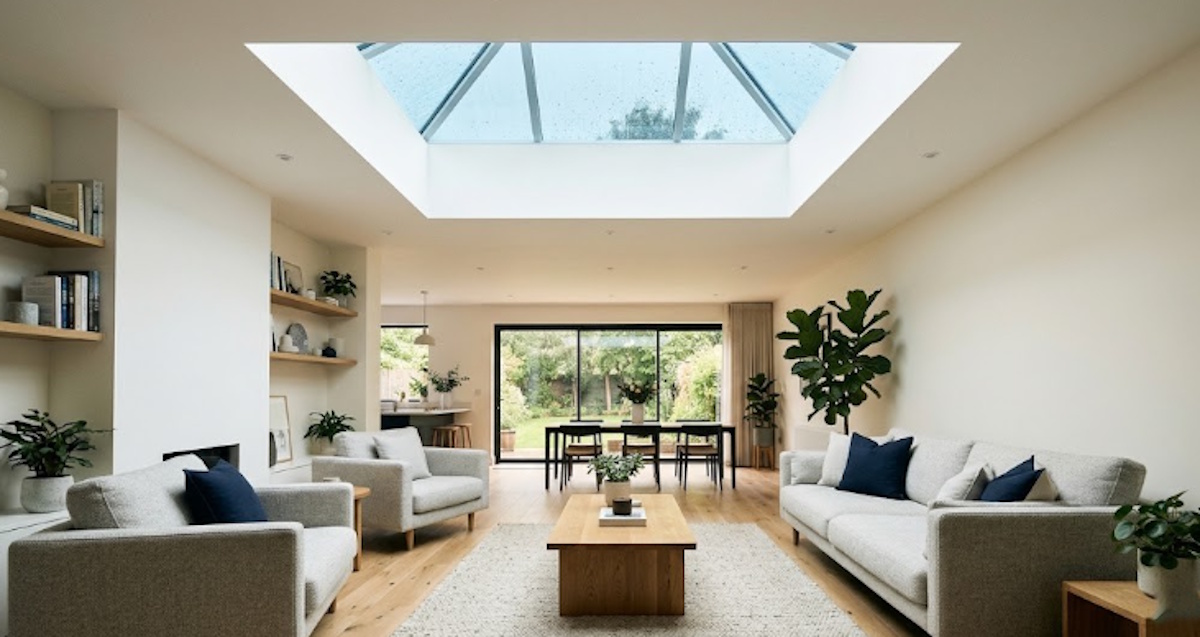
A perfect representation of this style is the Stratus Contemporary White Aluminium Roof Lantern. Designed with a brilliantly crisp white powder-coated finish, this model blends seamlessly into a standard white plaster ceiling, drawing the eye directly up to the sky rather than the frame itself. The contemporary design relies on a minimalist ridge, eschewing the traditional ‘spider web’ of rafters. This ensures that the maximum volume of natural light is channelled down onto the work surfaces below, making it an exceptional choice for illuminating long, sleek, marble or quartz-topped kitchen islands.
The Architectural Anchor: The 2-Way Design
For larger spaces, or for designs that lean towards an industrial or classic architectural aesthetic, a more structured framework can add incredible visual depth to a room. The 2-way design introduces central supporting rafters, creating a distinct, symmetrical geometry that looks stunning from both the interior kitchen and the exterior garden.
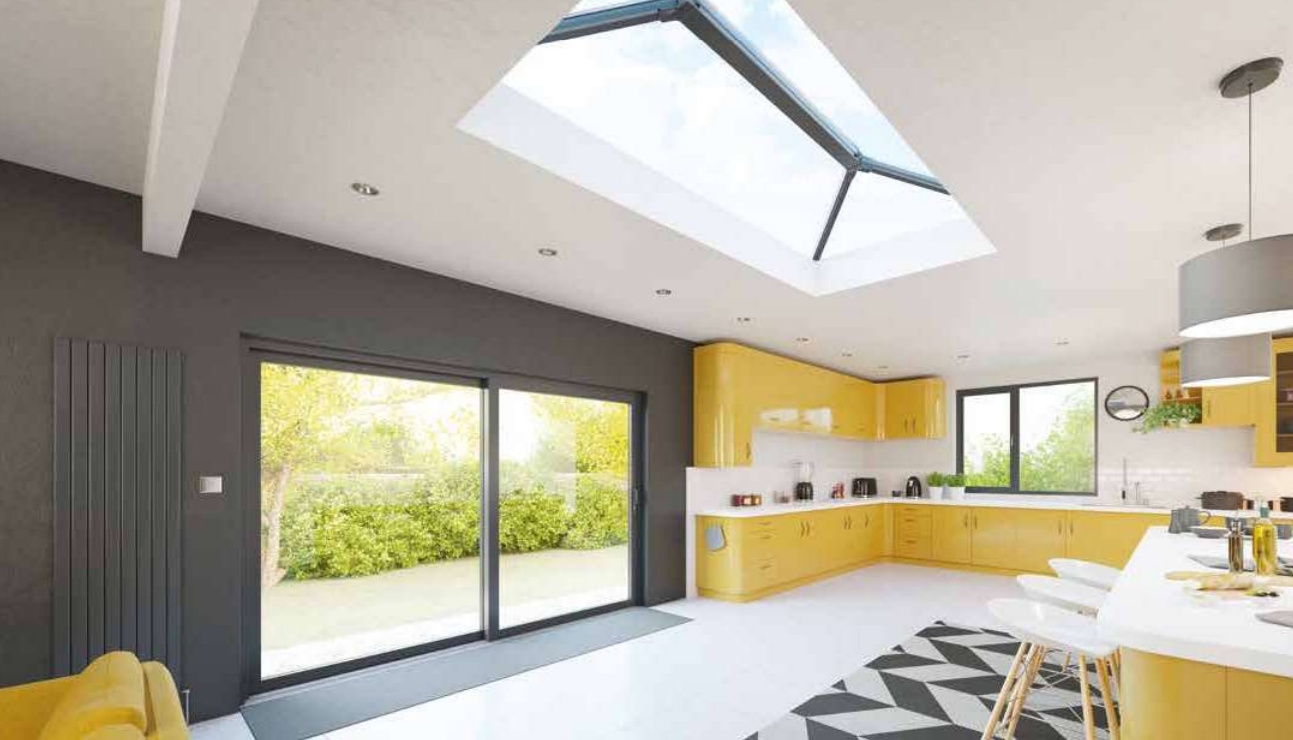
An exemplary model for this aesthetic is the Stratus Grey Aluminium Roof Lantern: 2 Way Design. Finished in a highly desirable Anthracite Grey, this model provides a striking, contemporary contrast against white ceilings. The grey framework acts as an architectural anchor, tying together other modern elements within the space, such as grey bi-fold doors or dark-toned kitchen island cabinetry. The robust 2-way structural design provides immense stability over larger spans, whilst still maintaining the signature 66mm slim sightlines, ensuring that structural integrity never compromises natural daylight ingress.
Elevating the Build: A Note for Installers
From an installation perspective, specifying high-calibre, precision-engineered aluminium rooflights ensures a smoother, faster, and more reliable build phase. The rigid nature of the powder-coated aluminium, combined with meticulously designed connecting nodes and the structural integrity of the polyamide thermal break, means the system goes together cleanly on-site. This significantly reduces the risk of call-backs regarding leaks or structural sagging, securing both the installer’s reputation and the homeowner’s peace of mind.
Enhance Your Kitchen with Zoning Architecture
Successfully zoning a kitchen island within a modern open-plan extension relies heavily on the intelligent manipulation of natural light. By integrating a premium overhead glazing system, you instantly create a highly functional, beautifully illuminated focal point. Crucially, by insisting on advanced engineering, specifically the polyamide nylon glass composite thermal break and high-performance solar control glass, you guarantee that this dramatic architectural feature enhances the energy efficiency and year-round comfort of your home, rather than compromising it.
Enhance your home with superior thermal performance. Call our team on 0800 046 3924 or contact us here to discuss your project.