

 Free Phone
 Made to Measure
 10 Year Guarantee
 Directly From Manufacturer
2026 Home Renovation Trends: Why Lantern Roofs Are Top of the List
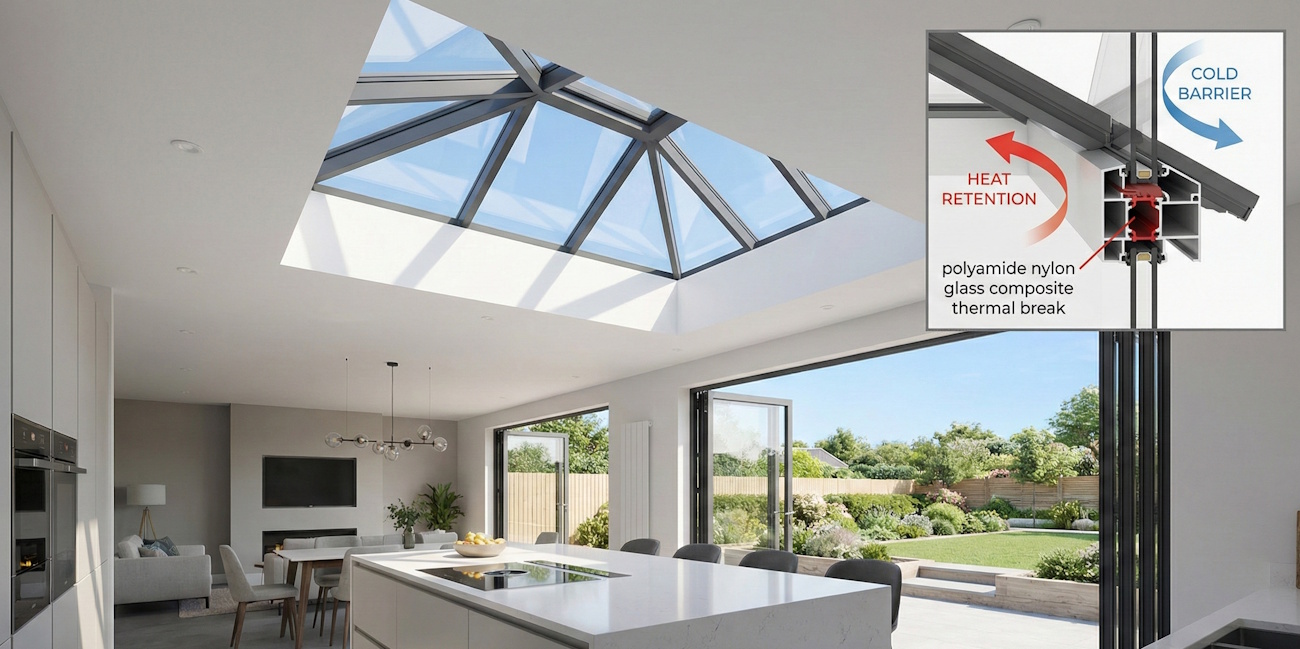
Summary: The Architectural Shift Towards High-Performance Glazing. As we approach 2026, the home renovation sector is pivoting away from standard glazing solutions toward architectural systems that prioritise energy retention and minimalist design. This article explores how advanced thermal break technology and slim aluminium profiles have established the roof lantern as the ultimate upgrade for flat roof extensions.
- Thermal Superiority: Utilising a polyamide nylon glass composite thermal break for 65% greater efficiency than standard aluminium.
- Architectural Aesthetics: Industry-leading 66mm slim sightlines for maximised natural light and a discreet profile.
- Climate Control: Advanced Solar Control Glass options to regulate internal temperatures year-round.
Redefining the Modern Extension: Light, Space, and Efficiency
The UK’s architectural landscape is shifting. As we look toward 2026, the focus of home renovation is no longer simply about adding square footage; it is about optimising the performance and visual impact of that space. Central to this movement is the resurgence and evolution of roof lanterns. Once seen merely as a way to illuminate dark rooms, they have evolved into high-performance architectural features that define the character of a kitchen extension, orangery, or living space.
However, not all glazing systems are created equal. The modern homeowner is increasingly educated on the importance of U-values and thermal dynamics. Consequently, demand for Stratus Lantern Roofs has surged, driven by the need for a system that balances a contemporary aesthetic with the rigours of the British climate.
Why is Thermal Performance the Defining Feature of 2026?
For years, the primary hesitation regarding large-scale glazing was heat loss. In the past, aluminium frames—while strong—acted as thermal bridges, conducting cold air from the outside into the home and allowing heat to escape. This phenomenon, known as ‘cold bridging’, undermines energy efficiency.
The Science Behind the Thermal Break
To rank as a top renovation trend amid rising energy costs, a roofing system must be thermally efficient. This is where Stratus distinguishes itself from generic alternatives.
The Stratus system incorporates a pioneering polyamide-nylon-glass composite thermal break. Unlike standard aluminium assemblies that may provide only a basic thermal barrier, this advanced composite technology creates a robust insulating layer between the internal and external aluminium profiles.
- Stops Cold Bridging: The nylon-glass composite is non-conductive, effectively blocking heat transfer.
- 550 Times More Insulating: This material is significantly more thermally efficient than aluminium alone.
- 65% More Efficient: Compared with conventional aluminium lantern systems, the Stratus thermal break technology is up to 65% more thermally efficient.
For the homeowner, this translates to tangible benefits: lower heating bills and a room that maintains a consistent, comfortable ambient temperature regardless of the season.
Minimalist Architecture: The Demand for Slim Sightlines
Design trends for 2026 are heavily leaning towards minimalism. The “industrial chic” and “Scandi-minimalist” aesthetics continue to dominate interior design, emphasising clean lines and unobtrusive fixtures. In the context of roof lanterns UK market trends, this means the frame should be barely noticeable, allowing the sky to be the primary feature.
The 66mm Advantage
Many competitor systems, particularly those utilising PVC or older aluminium designs, suffer from bulky ridges and wide glazing bars that obstruct the view. A key requirement for a high-end finish is reducing these visual obstructions.
Stratus has engineered a solution with incredibly slim sightlines of just 66mm. By utilising the structural integrity of high-grade aluminium, the rafters can be kept slender without compromising on load-bearing strength. This results in:
- Increased Glass Area: More natural light enters the room.
- Modern Aesthetics: A sleek, contemporary appearance that suits both period properties and modern builds.
- Discreet Finish: From the exterior, the low-profile design ensures the lantern sits elegantly atop the flat roof rather than appearing as an add-on.
Solving the Conservatory Climate Crisis: Solar Control
A common complaint regarding older conservatories and extensions is the “greenhouse effect”—rooms that are freezing in winter and unbearably hot in the summer. As we move into 2026, renovations are focused on rectifying these historical design flaws through intelligent glass specification.
Regulating Temperature with Glass Technology
Installing a premium lantern roof is not just about the frame; it is about the glazing unit it supports. To ensure the space is usable 365 days a year, specifying Solar Control Glass is essential.
Standard clear glass allows significant solar radiation to pass through, heating the air inside. High-performance solar control units reflect a portion of this heat back to the sky while allowing visible light to pass through.
- Summer Comfort: significantly reduces solar gain, preventing the room from overheating during British heatwaves.
- Winter Warmth: Low-E (low emissivity) coatings reflect internal heat back into the room.
- UV Protection: Helps to reduce the bleaching effect of the sun on furniture and flooring.
By combining the thermally broken frame with high-performance glass, you create a complete thermal envelope that adheres to strict building regulations and enhances living comfort.
The Evolution of the Flat Roof Extension
The flat roof extension is undergoing a renaissance. No longer viewed as the “cheap” option, modern flat roofs are sophisticated engineering projects often finished with single-ply membranes or GRP fibreglass. The crowning glory of these structures is increasingly the flat roof lantern.
Contemporary Design for Modern Living
While traditional pitched lanterns offer a sense of grandeur, the current trend also embraces the sleekness of flat skylights, such as the Premier Edge. However, for those desiring height and volume, the lantern remains the superior choice.
The geometry of a lantern roof adds vertical volume to a room, raising the ceiling height and creating a focal point above a kitchen island or dining table. Whether you opt for a 2-way, 3-way, or contemporary design, the structural elegance of the Stratus system supports the architectural vision of a modern flat roof extension. The discreet ridge and hip capping ensure that the external appearance is just as refined as the internal view.
Invest in Longevity: The Strength of Powder-Coated Aluminium
For installers and homeowners alike, durability is non-negotiable. 2026 trends are moving away from disposable culture towards “buy well, buy once.”
Why Aluminium Outperforms PVC
While PVC has its place in the market, it lacks the structural rigidity and thermal stability of aluminium. PVC can expand and contract significantly with temperature fluctuations, which can eventually lead to seal failure and leaks.
Stratus lanterns are constructed from hard-wearing, powder-coated aluminium.
- Resilience: The powder coating process creates a finish that is highly resistant to corrosion, fading, and chalking.
- Structural Integrity: Aluminium allows for larger spans with thinner frames, impossible to achieve with plastic.
- Ease of Installation: For the installer, the precision engineering of the Stratus kit means components fit together seamlessly, reducing time on site and ensuring a watertight finish every time.
Roof Lights and Lanterns: A Smart Investment for Property Value
When browsing for roof lights and lanterns, it is vital to view the purchase as an investment in the property’s value. Estate agents consistently report that natural light is a top priority for buyers. An extension that feels dark or cold is a liability; one that is flooded with light and thermally efficient is a major asset.
By upgrading a standard flat roof with a Stratus lantern, you are effectively:
- Improving Energy Ratings: Contributing to a better EPC score for the home.
- Enhancing Lifestyle: Creating a biophilic environment that connects the indoors with the outdoors.
- Future-Proofing: Installing a system that meets and exceeds current thermal regulations.
Whether you are an installer looking to offer your clients the best product on the market, or a homeowner seeking to transform your living space, the technical specifications of the Stratus system offer a clear advantage.
Conclusion: The Clear Choice for 2026
As we look ahead to the renovation trends of 2026, it is clear that the market is demanding a synthesis of form and function. Homeowners are no longer willing to compromise on thermal efficiency for the sake of design, nor are they willing to accept bulky, unsightly frames to achieve warmth.
The Stratus lantern roof stands at the intersection of these demands. With its market-leading polyamide nylon glass composite thermal break, it solves the issue of heat loss. With its ultra-slim 66mm sightlines, it satisfies the desire for minimalist aesthetics. It is a product engineered for the future of British housing.
Enhance your home with superior thermal performance. Call our team on 0800 046 3924 or contact us here to discuss your project.